Direct answer
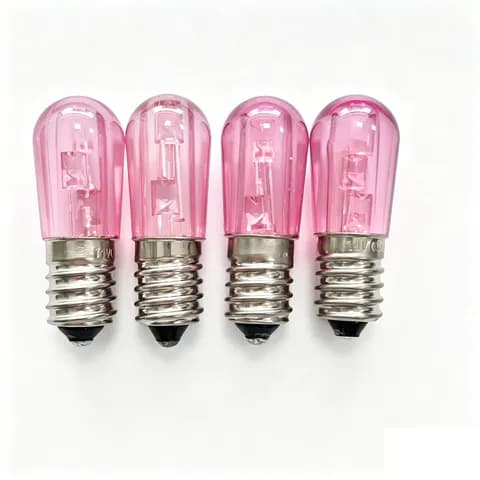
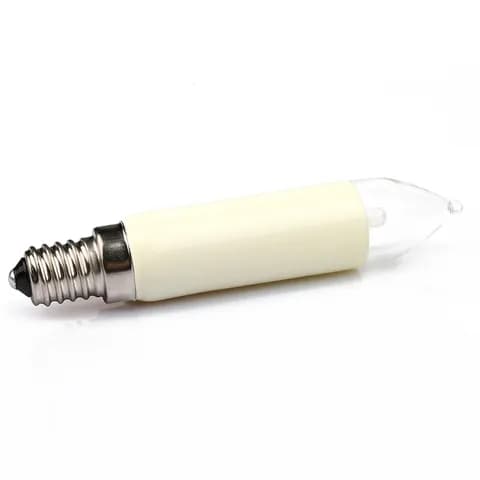
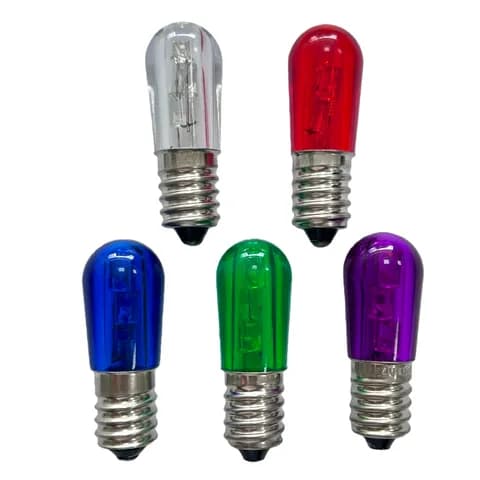
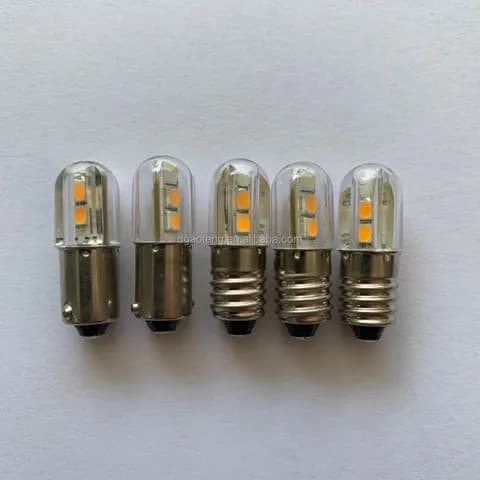
An E10 bulb is a miniature Edison screw bulb commonly identified by a small screw base around 10 mm. It may be used in decorative lighting, miniature lamps, indicators and replacement programs, but the base alone does not confirm voltage, wattage or application suitability.
Comparison table
| Item | Buyer note |
|---|---|
| Base | Confirm the socket accepts E10 screw bulbs |
| Voltage | Read the old bulb or equipment label before ordering |
| Wattage | Check brightness, heat and load requirements |
| Shape | Confirm glass diameter and overall length |
| Application | Decorative, indicator and equipment uses can have different requirements |
How to identify
Measure the screw base diameter or compare it with the old E10 sample.
Record the voltage and wattage marking if available.
Photograph the side and base of the old bulb.
Check fixture clearance, especially for decorative arches, panels and covers.
Buyer checks
Confirm E10 base, voltage, wattage and lamp shape.
Share the application and target market.
State whether incandescent or LED is required.
Confirm by RFQ when the old marking is missing.
Confirm by RFQ
AOTENG can source or manufacture E10 options from supplied specifications, but final fit, voltage, wattage and application suitability must be Confirm by RFQ.
Common mistakes
Ordering by E10 base only and ignoring voltage.
Assuming E10 LED and E10 incandescent behave the same in every circuit.
Ignoring overall length in decorative fixtures.
FAQ
Is E10 a voltage?
No. E10 describes the screw base family, not the operating voltage.
Can E10 bulbs be LED or incandescent?
Yes. E10 describes the base; the light source must be confirmed separately.
What should I send for an E10 RFQ?
Send base, voltage, wattage, shape, dimensions, quantity, application and sample photos.
Sources and limits
- AOTENG product catalog - Product and specification reference
- AOTENG procurement support - RFQ and sourcing guidance